
Coaching by the numbers.
Tools, how-to guides and real-world case studies — straight-talking, built from actual coaching, no filler.
Video guides
Short walkthroughs of TrackStat, from first login to full analysis.

A quick tour of the platform — athlete profiles, tools and where everything lives.
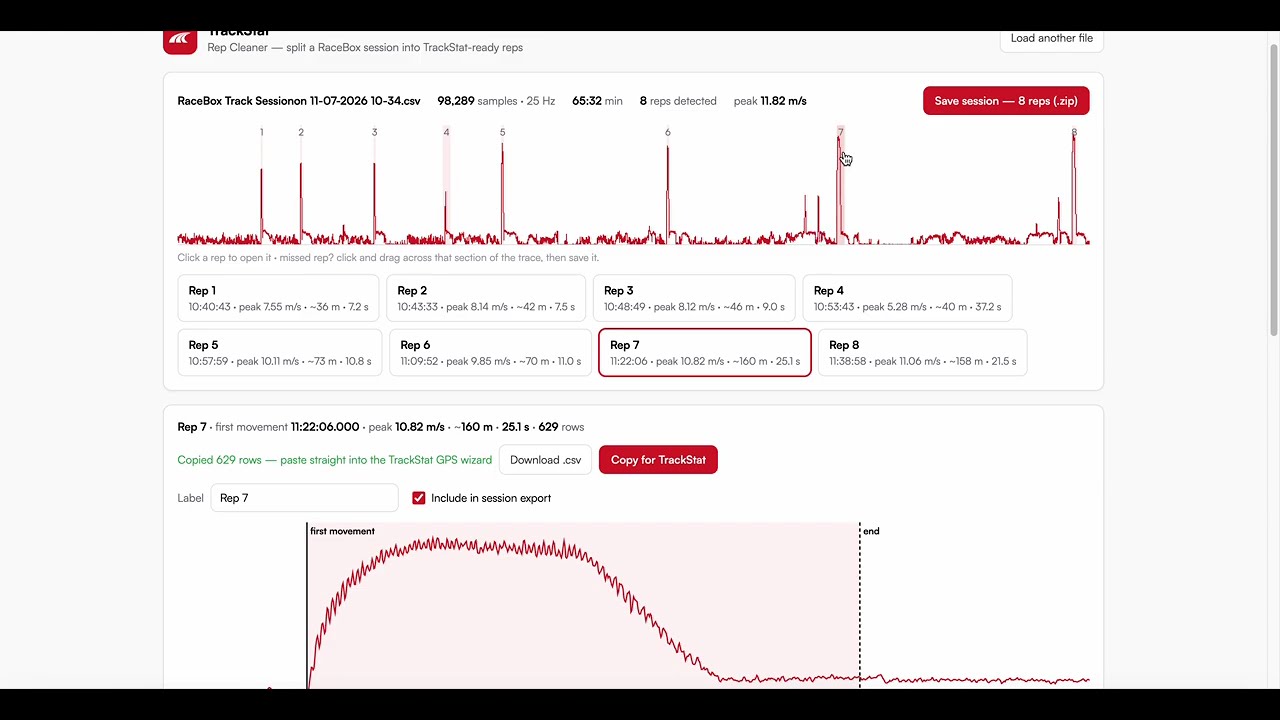
Importing a GPS session and reading the split-by-split race breakdown.
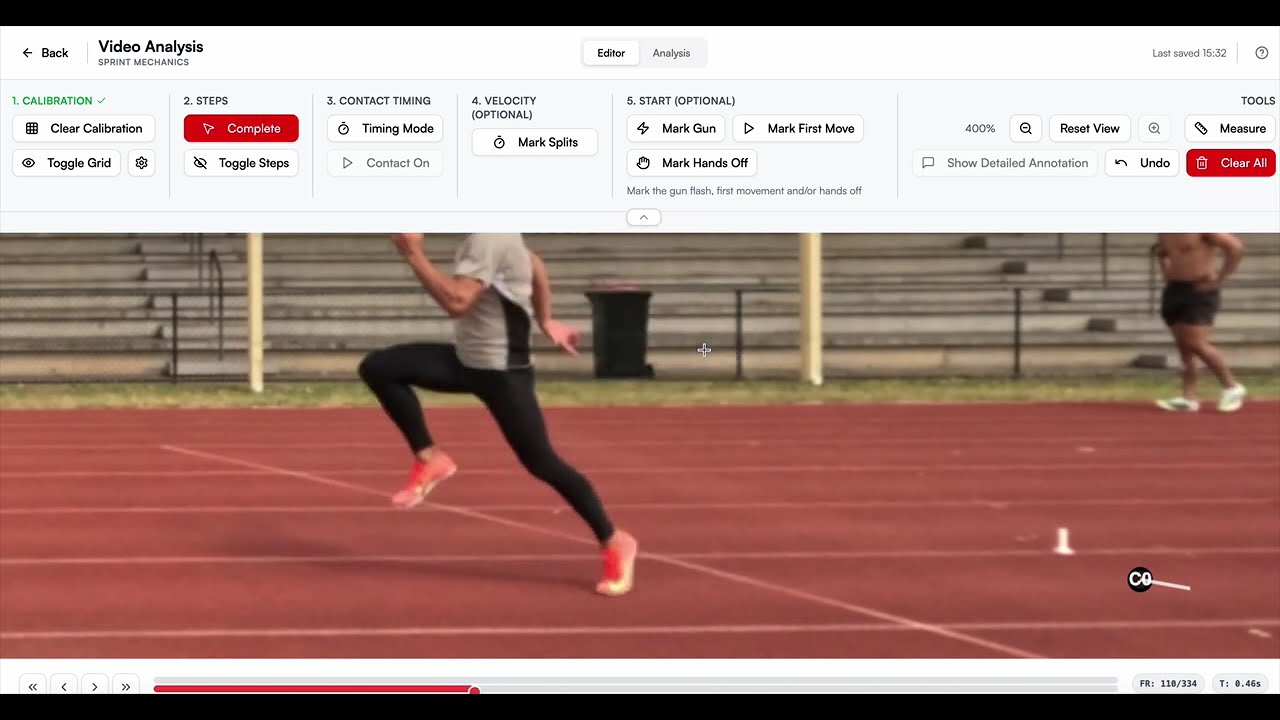
Marking up a sprint frame by frame to pull step length, contact and flight time.
Tools
Drop in a RaceBox session and split it into clean, individual reps — trim each rep's start and end, label them, and export them ready to import into TrackStat.
A sample CSV showing exactly how to lay out an athlete's competition results for bulk import into Competition Insights — one example row for each event type, from sprints and hurdles to throws and relays.
Guides
Set up the GPS once, record a whole session hands-free, then split it into clean per-rep files ready to import — every step from the track to your splits.
Video reads contact a little long and flight a little short — not the camera, just one frame, and a simple rule to take it back.
TrackStat is a standalone web app — it doesn't sync with your phone. Here's how to get a clean, full-quality clip ready to upload.
Cones, camera distance, and the small habits that make your measurements accurate — and repeatable.
Camera angle, frame rate and lighting — the simple setup that makes every step easy to mark up.
What each spatiotemporal metric actually tells you about an athlete — and what to do with it.
Turn each athlete's leg length and current velocity into individualised drill distances.
One source of truth per athlete — what to capture from day one so the data pays off later.
Research reviews
What the published research says — and how much weight to give it.
The 25 Hz RaceBox units behind TrackStat's GPS race analysis, put up against two lab gold standards over 106 sprints. They matched — and the two gold standards disagreed with each other more than the GPS disagreed with the laser.
Twenty-four elite sprinters, 51 World and Olympic medals — and no single acceleration template. Two can reach the same 10 m time through different mechanics. A summary of the study, its limits, and what it means on the track.
A force-plate study of 5 kg overspeed towing found top speed rose about 9% — but the athletes' own propulsive force fell and braking rose. The extra speed came from the tow, not the athlete.
A 146-sprinter study measured how step length, step frequency and ground forces change across performance levels. Step length develops early; higher turnover and greater propulsive force separate the fastest.